
Compare the Box Elder County Owner-of-Record Details
Pull the Assessor parcel card and the newest deed first. Match names and dates. Compare owner name, mailing address, and legal description. Screen labels vary. Treat the checklist as a comparison tool rather than a promise that any single display carries every field. The current owner question concerns the present record; older transfers follow the former-owner research route.
| Owner of record | Name associated with the parcel in the Assessor's current property information |
|---|---|
| Vesting | How the latest deed names the grantee, including any entity or trust |
| Mailing address | Address used for tax correspondence, which can differ from the property |
| Situs | Physical location used to identify the parcel |
| Deed reference | Recorder index entry and instrument image for the most recent transfer |
| Transfer date | Date shown on the latest recorded conveyance |
The owner of record is a name in a government record. It does not identify an occupant. A mailing address can be a second home, an office, or an entity address. Use it only for a lawful property matter, and never infer residence from it.
How Current Is a Box Elder County Owner Record?
The Assessor lists and values taxable property each year. Its owner display can lag a fresh deed. No published schedule states how quickly the name changes after recording. So do not attach a fixed number of days to the gap. A sale that has just closed may appear first in the Recorder's index. The Assessor roll keeps serving its annual valuation purpose.
When timing matters, compare the newest recorded deed date with the owner name in the property information. Confirm that the deed describes the same parcel. Identify who received the interest. A difference between the two displays can be timing. It can also be a parcel mismatch or an entity-name variation. Ask the office to explain the record rather than choosing one result without context.
The county's public viewer separates property information from document images. Review EagleWeb access details for current search and image options.
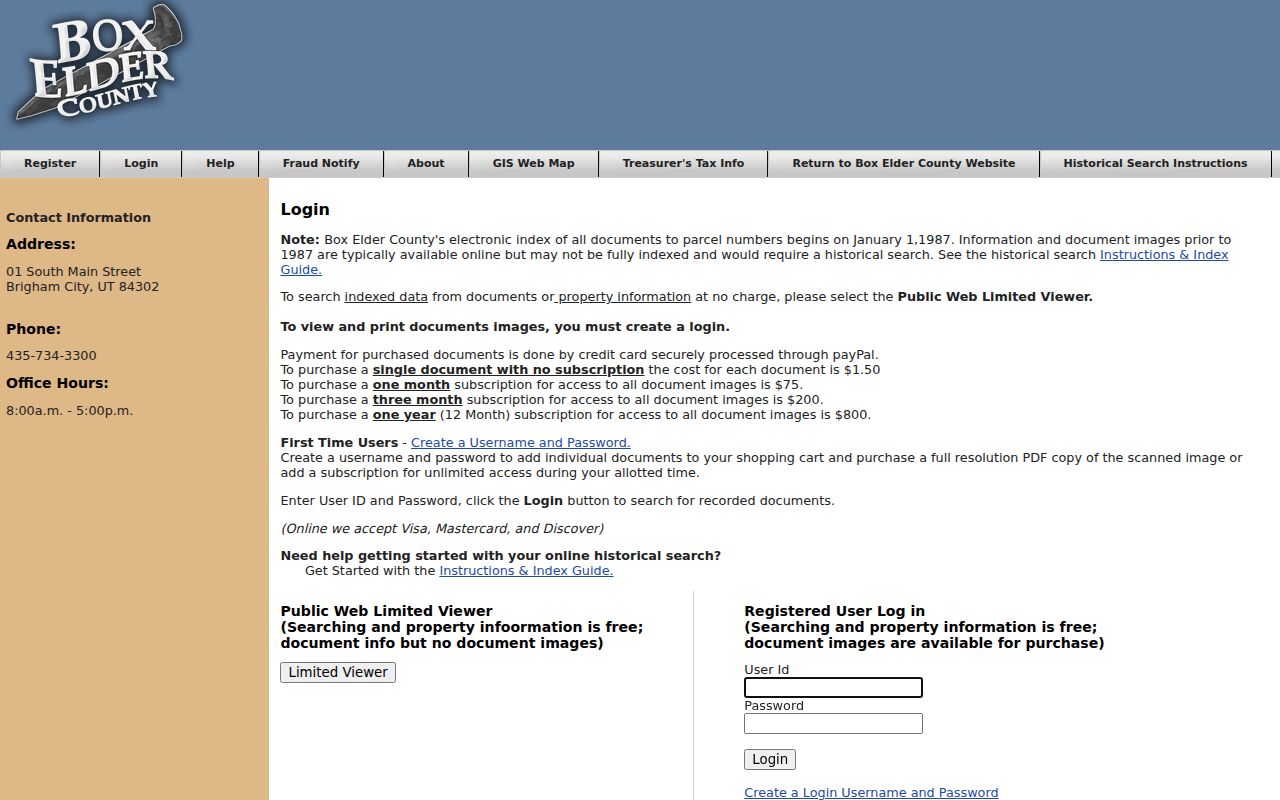
A deed index entry is not clear title. Read the instrument itself, keeping its date, parties, and legal description beside the Assessor entry when you compare the two.
Verify the Current Owner in the Deed Index
To confirm the current owner, start from the Assessor property information. Note the parcel number there. Then compare the result with the most recent deed in EagleWeb. The Recorder's parcel-linked electronic index begins in 1987. It is the place to verify the grantee. If an older document is not fully indexed, the Recorder's historical-search instructions and direct office help fill the gap.
- Open the Assessor property information and record the parcel number and owner name shown.
- Search the Recorder index for the newest deed tied to that parcel or legal description.
- Read the grantee and legal description on the instrument and compare them with the parcel.
- If an entity is named, preserve its exact legal name and verify the deed rather than guessing at individuals.
- Owner of record
- The party associated with the parcel in the Assessor or recorded instrument.
- Vesting
- The way the deed names the grantee and the form in which the interest is held.
- Registered agent
- A contact for an entity, not automatically the owner of its real property.
Entity Vesting in Box Elder County Owner Records
A deed may name an LLC, trust, partnership, or estate instead of an individual. Copy the grantee name exactly. Compare it with the Assessor's owner information. A Utah corporate registry can add context about a business. Context is not ownership. The recorded deed proves which party received the interest.
Do not treat a registered agent, officer, trustee, or mailing contact as the beneficial owner without evidence. If the entity name has changed, ask the Recorder how the instrument is indexed. The same goes for a deed signed in a trustee capacity. For a title conclusion, seek legal advice.
Property Watch Can Alert a Box Elder County Owner
The Recorder offers a free Property Watch email alert. It flags documents that reference the participant or the property. The county names deeds, liens, and reconveyances as examples. An alert can help a current owner notice a new filing, but it does not change the record. It also does not establish the filing's legal effect. Enroll through the Recorder's official page, then open EagleWeb when an alert arrives. Do not decide from the notice alone. Read the actual document, and compare its parcel and parties. Raise an unfamiliar filing with the Recorder or a qualified legal professional.
Annual Assessment and the Present Owner Question
The Assessor's annual valuation work supports tax administration. Its roll is useful for the name tied to a parcel, mailing information, and property-value questions. It is not the Recorder's event-by-event deed index. A current owner search should name the source and date of each statement instead of collapsing both offices into one result.
When a record looks inconsistent, verify the parcel number and legal description first. Ask the Assessor about the tax record. Ask the Recorder about the conveyance. The custodian who maintains a record is the one best placed to resolve a timing or data-entry question.
Use the Box Elder County Mailing Address with Care
A tax mailing address offers a lawful route for a notice about the land. It may belong to an entity or a representative. The situs stays the property location. Neither field proves who occupies the home. Utah GRAMA access also has protected categories, so a public record is not permission to collect or republish every personal detail.
Lawful use. Use the owner mailing address only for a relevant property matter. Do not use a current owner result to stalk, threaten, intimidate, or harass anyone.