
Build a Box Elder County Former-Owner Timeline
The deed trail runs from grantee to grantor. Each instrument adds one former owner to the timeline. Box Elder County's electronic parcel-linked index begins in 1987. Older deed images may exist online, but many are not fully indexed, so a name or parcel search can miss them. That gap is where historical-search instructions and a question to the Recorder take over, rather than any assumed date range for the paper books or film.
| Source | Years It Covers | Where Held | What It Shows |
|---|---|---|---|
| EagleWeb parcel-linked index | January 1, 1987 onward | Box Elder County Recorder | Indexed instruments tied to parcels |
| Earlier deed images and indexes | Pre-1987; indexing varies | Recorder historical-search route | Older transfers that may need manual tracing |
| Recorder process film and Archives series | Series dates vary | Utah State Archives and Recorder | Finding aids for deed and county record groups |
| Recorded plats and surveys | Dates shown on each plan | Recorder, Surveyor, and Archives | Lot, block, survey, and subdivision references |
Begin in EagleWeb with an indexed modern deed. Stop when the parcel-linked index ends. At that cutoff, the portal's historical-search instructions and a question to the Recorder identify which older index or deed book applies. The Utah Archives catalogs can surface record series and film leads, while a recorded plat adds context when a lot description needs it.
The 1987 Index Line in Box Elder County Ownership History
The parcel-linked electronic index begins on January 1, 1987. That date marks the online index, nothing more. It does not mean older images are gone. The Recorder notes that pre-1987 information and images are typically online, though not always fully indexed. A name or parcel search that returns nothing should point you toward the historical-search instructions or a direct question to the office.
Carry each grantee and grantor name forward. Every name becomes the next search term. If the portal stops resolving a name, give the Recorder the parcel, the legal description, the names, and an approximate date. The Utah Archives lists Box Elder County Recorder series and a deed process-film finding aid. Those tools help identify the next record group.
Keep every citation in the timeline. Two instruments may describe one transfer. A re-recorded deed, a renamed entity, or a split parcel can make the chain look broken when it is not.
Follow Each Box Elder County Deed Back One Transfer
Work from the newest deed backward. The grantee on that instrument received the land. Its grantor gave up an interest. Search that grantor as a grantee to find the deed for the earlier transfer. Repeat the loop, and each former owner in Box Elder County appears in order.
- Find the newest deed for the parcel and record the grantee, grantor, date, and legal description.
- Search the grantor as a grantee to find the earlier deed in which that party received title.
- Compare the land description and instrument date before adding the earlier party to the timeline.
- Continue until the index reaches an older source, then ask the Recorder about historical books or film.
- Grantor and grantee
- The parties named as transferring and receiving an interest in a deed.
- Chain of title
- The ordered sequence of recorded transfers tied to the land.
- Legal description
- The deed's land description, which can remain useful when an address changes.
Box Elder County's Courthouse and Archives Trail
Box Elder County's Historic County Courthouse grew a west wing. Construction ran from 1910 to 1911. The wing held a Recorder's office, public area, copy room, vaults, and an abstract room. The Recorder moved in during November 1911. The building hints at how records were organized. But the useful clue remains the actual book, instrument, or film reference.
The Utah State Archives maintains an agency-series catalog. It also publishes a recorder process-film listing. Its agency lookup spans recorder, assessor, auditor, clerk, and treasurer record groups for Box Elder County. The Archives agency-series page displays that route. Open the Utah Archives record-series list and look for a Box Elder County series that fits.
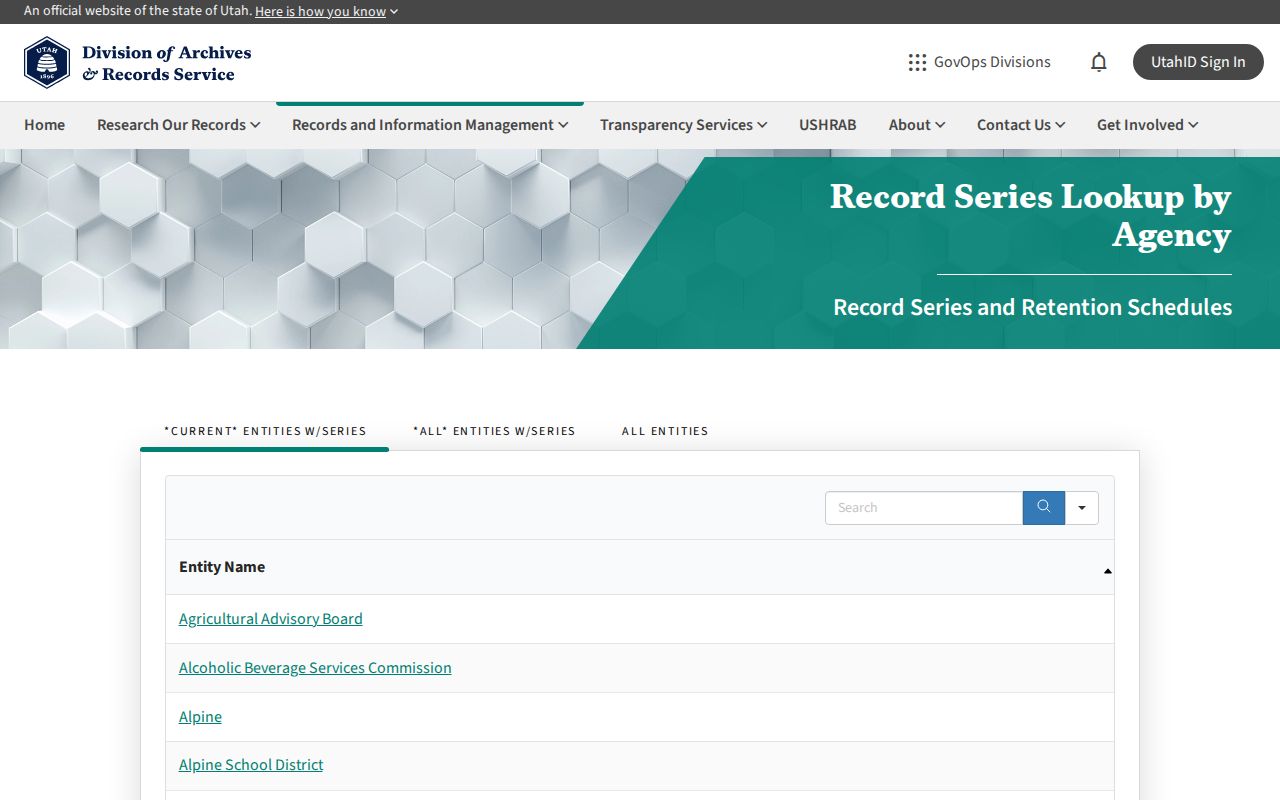
Finding aids point to sources. They do not guarantee name indexing on every page. Keep the county, office, series title, film reference, and date span together when you contact an archive or the Box Elder County Recorder.
Plats and Legal Descriptions Tie Past Owners to Current Parcels
Street addresses make weak keys over time. Address grids and parcel boundaries both change. A deed may never have carried the address you know now. The legal description is the durable link. It may read as lot and block, township and range, or metes-and-bounds calls. A recorded plat can show how an old tract became a named lot or subdivision parcel.
Box Elder County plats prove the point. Discovery Grove in Brigham City cites surrounding blocks and street names. Perry's Acorn Ridge plan leans on older plats, a road dedication, and later surveys. It also draws on a 2020 deed. The 2023 YAG plan crosses Brigham City and Perry approvals and spells out easement details. Match the deed's description to the recorded plan. Never assume a current map label names the historic parcel.
When a parcel was divided, compare parent and child legal descriptions at each transfer. An owner's name alone cannot show which piece of land a particular instrument conveyed.
Address Changes Can Hide Box Elder County Past Owners
Address systems differ across the county. Brigham City uses its own Main and Forest origin. Perry counts from Brigham City, while Tremonton runs on a separate Main and Tremont origin, and other Box Elder communities mix Brigham-based and independent grids. A current address may not match the clue on an older deed. Rural land and unbuilt subdivisions make the gap wider.
The parcel number bridges those changes. So does the legal description. A state address-origin table helps locate a modern situs, while the recorded deed and plat explain the land as it stood in an earlier transfer. No city label or ZIP name can establish a historic boundary or chain on its own.
Court Records May Explain a Box Elder County Transfer
A court case can explain the story behind a Box Elder County transfer. An estate, a judgment, or a divorce may sit behind a change in ownership. But the case file is never a substitute for the recorded deed. Utah Courts Xchange runs its own case searches, with separate access rules and document fees. A case result can surface a filing or a party name worth chasing. The Recorder's deed records remain the place to verify the actual instrument.
Never infer a deed transfer from a caption alone. A probate reference does not prove title moved. Tie every court record back to land through a recorded deed and its legal description. A representative or entity may have handled the transfer. Keep the name and the capacity shown on the document.
How Far Back Box Elder County Ownership Records Reach
The digital parcel-linked index reaches back to January 1, 1987. Older deed records may go farther. Images, deed books, Recorder historical-search material, and Utah Archives holdings can all extend the trail. No single earliest year covers every parcel. The Recorder publishes no courthouse fire or known missing decade, so treat any gap as something to investigate rather than blame on a rumored loss.
For the earliest transfer on a parcel, ask the Recorder or Archives which series and dates match its legal description. Keep the current deed, the prior grantor, and the legal description at hand. A historical owner timeline is not a title search. The timeline answers who held the land. Only a title search supports a legal decision.
Lawful use. Use prior-owner research for house history, lawful property diligence, and civic research. Do not use a historical name trail to stalk, threaten, or harass a living person.