
Separate the Value Numbers on a Box Elder County Record
A Box Elder County parcel can carry three different value figures at once. The assessor publishes an annual estimate. The tax roll applies a taxable level to that figure. And a recorded deed may show a sale price from a totally different moment. None of these numbers substitutes for another, so comparing them takes care. The assessor's property screen loads its fields through JavaScript. The county publishes no complete field list for it. Treat the available sources as separate windows onto the parcel. They are not one parcel card showing every value in a single view.
| Value | What It Is | Where |
|---|---|---|
| Assessed value | Annual value used by the Assessor for tax administration | County Assessor |
| Fair market value | Assessor estimate under Utah's valuation standard | County Assessor |
| Sale or consideration amount | Amount stated in a recorded transfer when present | Recorder deed or instrument image |
| Taxable value | Value after applicable primary residential treatment | Assessor record and tax context |
Utah assesses most property in Box Elder County at 100 percent of fair market value. Qualifying primary residential property is the exception. It receives a 45 percent reduction. That leaves a 55 percent taxable level on the tax roll. Remember that the reduction shapes taxation only. It does not rewrite a recent sale price on a deed. It says nothing about what a buyer might offer today.
January 1 Anchors a Box Elder County Property Value
January 1 anchors the valuation date for locally assessed property across Utah. Working from that lien date, the Box Elder County assessor estimates fair market value for tax purposes and lists taxable property on the annual tax roll. That estimate answers one question. A later sale answers another, using different evidence, so the two figures can legitimately diverge. The assessor's page describes its valuation role and links out to property information. Read Box Elder County Assessor guidance for the county's own description of its yearly work.
Copy the valuation date and year along with any number you save. A current search result can display a figure tied to a specific assessment year. Strip away that date and the value becomes hard to compare against a deed or a market report.
Primary Residential Treatment Changes Taxable Value
A qualifying primary residential property in Box Elder County gets a break. State statute cuts its taxable value by 45 percent. That leaves 55 percent subject to tax. Other taxable property is generally assessed at 100 percent of fair market value. That figure comes from the county's own explanation. These percentages describe the taxable level only. They are not an appraisal or a prediction of sale price.
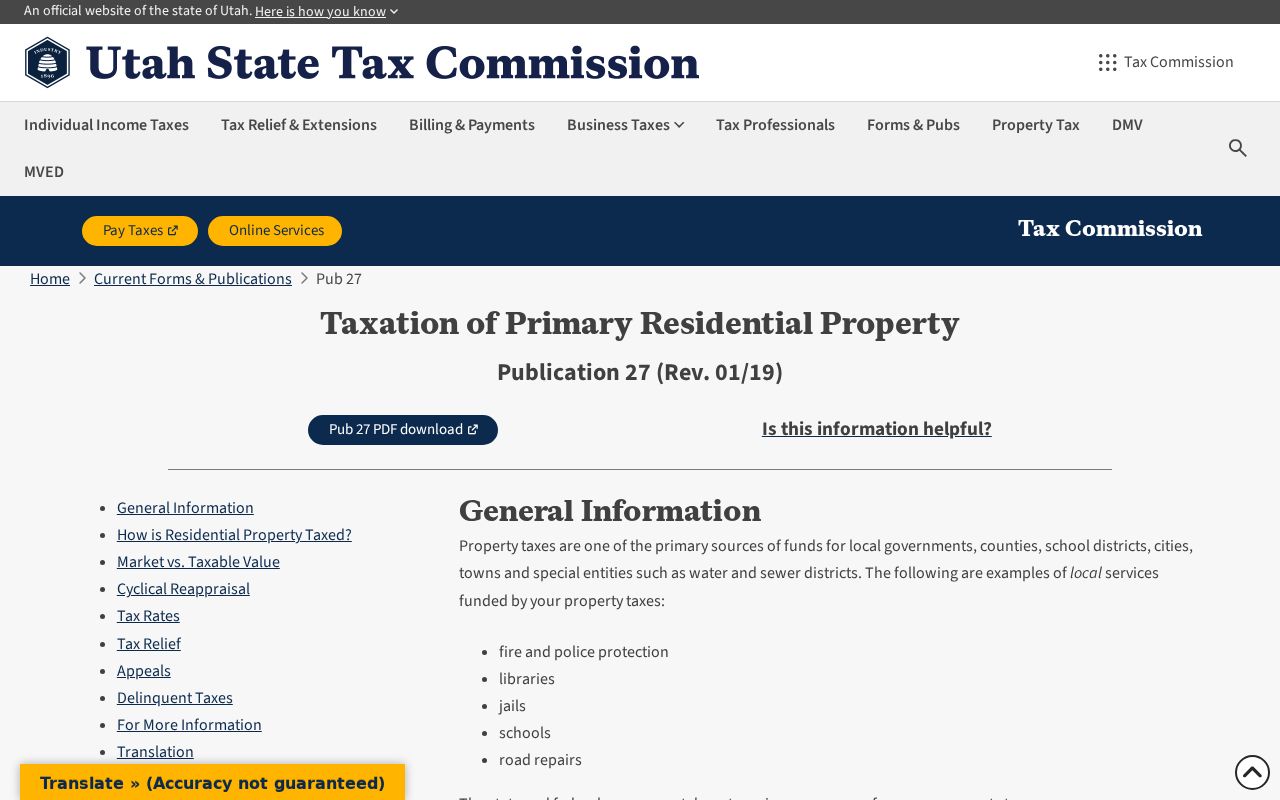
The Utah tax publication explains the residential exemption and related property-tax rules. Check the current state publication for the applicable terms before relying on any figure.
A taxable amount that seems low may simply reflect primary residential treatment on the parcel. Check the classification in the property records first. Ask the Box Elder County Assessor how a specific record is classified rather than inferring it from a street or mailing address.
Look Up the Assessed Box Elder County Property Value
Start with the Assessor's property information portal. Find the parcel and its annual value record there. Search EagleWeb directly and follow its live controls. If an address is ambiguous, ask the Assessor for help. They can match it to the right parcel number. Keep that parcel number and the legal description handy. They tie the Box Elder County property value to the correct lot.
- Locate the property through the Assessor's EagleWeb property information.
- Record the value and assessment year displayed for the matching parcel.
- Check the newest recorded deed for any stated sale or consideration amount.
- Compare like properties only when the sources identify similar land and dates.
- Assessed value
- The Assessor's value for tax administration.
- Fair market value
- The county estimate under the state standard as of the valuation date.
- Taxable level
- The portion used after applicable treatment, including the primary residential reduction.
- Sale price
- Consideration reported in a transfer document, which may not equal a later market value.
A Recorded Box Elder County Sale Is a Point-in-Time Clue
A deed can supply a sale or consideration reference for a transfer. It is not an appraisal. The Recorder's index and images simply document a transaction. It comes with its own date, parties, and circumstances. Read any transfer amount alongside the instrument and the legal description. Do not treat it as a current offer or a guaranteed market benchmark.
The parcel-linked electronic index in EagleWeb begins in 1987. The public limited viewer allows free searching and property information. Document images use a registered paid tier, so expect a fee there. If a sale amount does not appear in the index, open the image or ask the Recorder. Do not assume the price field is missing from the document itself.
Compare a sale figure with the Assessor value only after checking the assessment year, the parcel identity, and whether the recorded transfer covers the same property. A subdivision, partial interest, or nonstandard conveyance can complicate a simple price comparison. Keep that in mind with Box Elder County deed records.
Annual Assessment Does Not Track Every Market Change
The Box Elder County Assessor values property through mass appraisal. Each year the office updates assessments for the tax roll. It announces no fixed parcel-card refresh date or countywide revaluation cycle. Treat the annual notice as the anchor. When a value question matters, compare that notice and its assessment year against recent market evidence in the area.
Other details shape how a number should be read. Property characteristics, land, improvements, and the valuation date stated in the property records all matter. Parcel cards vary in what they display. No single field or comparable-sale panel appears for every property in Box Elder County.
Keep Box Elder County Property Value Separate from the Tax Bill
Value and tax are two different things. The Box Elder County Assessor sets the value; the Treasurer bills and collects. Taxing entities adopt rates, and those rates apply to taxable value. An unchanged assessed value can still sit beside a different tax bill. That happens when another part of the calculation moves. This page stays on what the value number means. It does not cover paying a balance or filing an appeal.
Need payment help, exemptions, or appeal steps? Turn to the Box Elder County property tax records guide. It covers the account-number lookup and the state appeal calendar.
Limits of a Box Elder County Assessor Estimate
An Assessor estimate exists for one purpose: tax administration. It is not a market appraisal. A sale price, a lender's appraisal, and a buyer's offer can each land far from the Assessor's number. None of them is wrong for that reason. Box Elder County parcel data and GIS map layers help you place a property in context. But context is not a valuation. When a decision needs a current opinion of value, hire a licensed appraiser.
Value vs price. A Box Elder County property value on the tax roll is not what the property will necessarily sell for. Use a licensed appraiser for an independent market opinion.