
Read the Parts of a Box Elder County Tax Record
A tax record in Box Elder County often blends two offices into one screen. That blending hides a real split. The Assessor lists and values taxable property each year. The Treasurer applies the rates taxing entities adopt, bills each account, tracks payment status, and issues refunds. Keep the two threads straight. Value is one decision; amount due is another. A careful read separates them before drawing any conclusion from the record.
| Field | What It Shows | Where |
|---|---|---|
| Assessed value | Value established for property-tax administration | Assessor |
| Fair market value | The Assessor's estimate under Utah's valuation standard | Assessor |
| Residential treatment | Qualifying primary residential property receives a statutory reduction | Assessor |
| Tax bill and status | Amount billed and payment or delinquency information | Treasurer |
| Taxing entities | Entities that levy rates against taxable value | Treasurer |
A tax bill is not a sale price. An assessed value is not a private appraisal, either. Utah generally values taxable real property at fair market value. Qualifying primary residential property gets a 45 percent reduction. That leaves 55 percent of its value taxable. That treatment shifts the taxable base, not what market value means. The Box Elder County property value guide walks through the value types in more detail.
January 1 Sets the Box Elder County Valuation Date
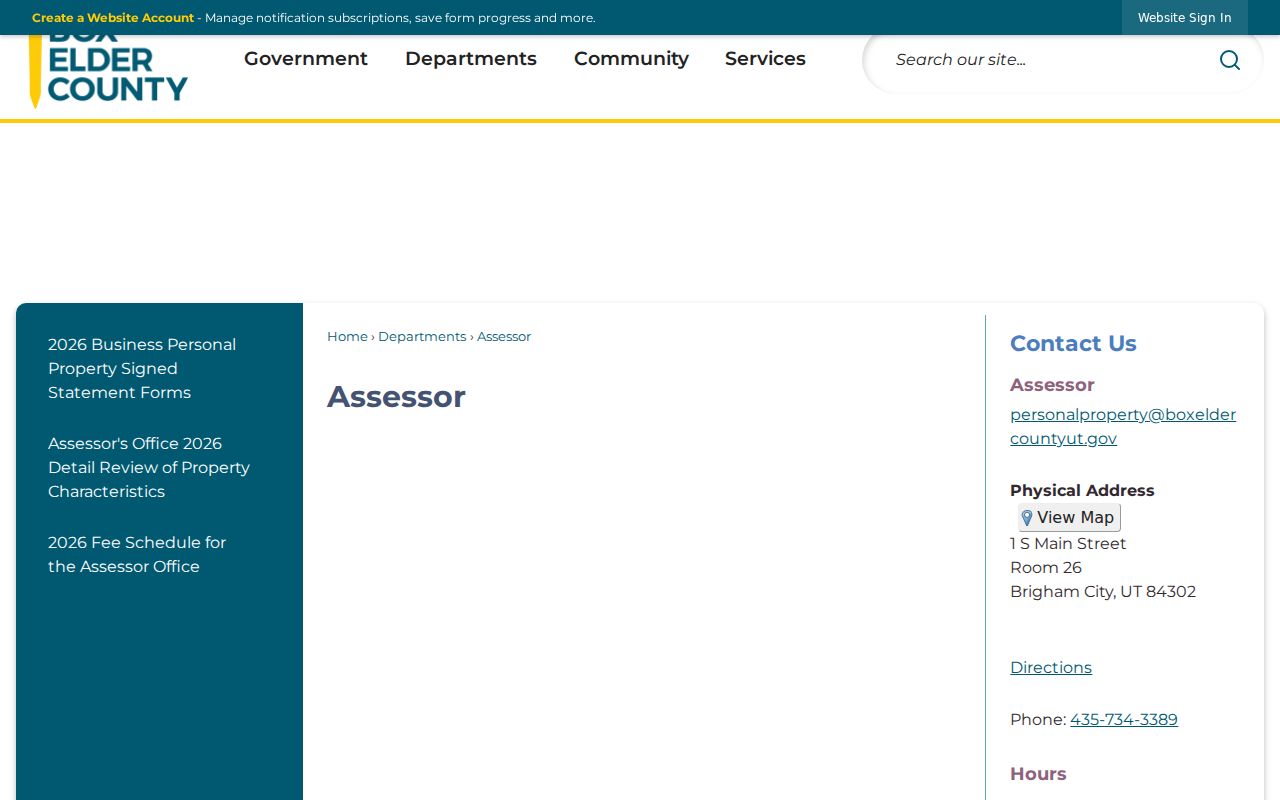
Utah's locally assessed property cycle uses January 1 as its valuation date. The resulting figure is an estimate for the tax year, not a forecast of a later sale price. Each year the county Assessor lists and values taxable property, and county guidance notes that primary residential treatment differs from the general 100 percent fair-market-value level applied elsewhere. The Assessor's official page lays out this annual role and its valuation standard. Review Box Elder County Assessor information for current instructions from the office itself.
Always keep the assessment year beside any value you write down. Figures from different years, compared without the valuation date, can make a normal annual change look like a direct sale comparison.
The 45 Percent Reduction in Box Elder County Residential Records
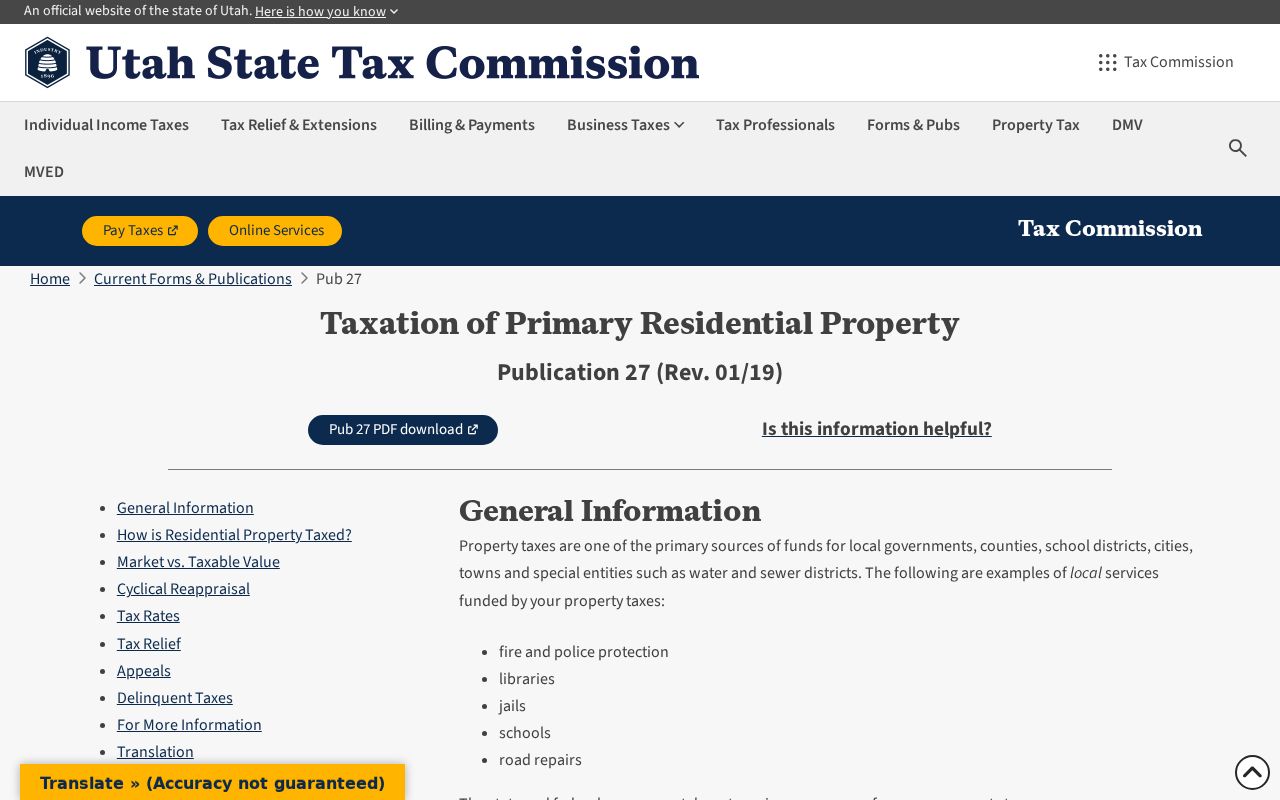
Utah gives qualifying primary residential property a 45 percent reduction from fair market value. This applies for property-tax purposes. The remaining 55 percent is the taxable level the Assessor describes. Property that does not qualify sits at the general 100 percent fair-market-value level. That standard comes from the county's account of state law. The reduction is not a second appraisal of the home. It does not mean the house is worth only 55 percent of its sale value. What it changes is the portion of value used in the tax calculation. Read the Assessor figure and any residential treatment separately. Then set the resulting taxable basis beside the Treasurer bill. The state publication describes the residential exemption and related delinquency rules. Check the current Utah property-tax publication for its terms and application guidance.
Ask the Assessor directly when a parcel's treatment is unclear on the record. Eligibility should never be inferred from an address or mailing location alone.
Look Up a Box Elder County Tax Bill by Account
The Treasurer payment page is the route for a bill, payment status, and amount due. Its online lookup requires the property account number. An address can help pinpoint a parcel in EagleWeb or GIS. It may not carry you through the payment lookup itself. If the account number is missing, contact the Treasurer with the property location. Ask how to find the right account before paying.
- Locate the parcel and property account number in the county property information.
- Enter the account reference on the Treasurer payment route and check the displayed bill.
- Review the payment status and any prior-year balance shown by the system.
- Ask the Treasurer to explain a balance or receipt that does not match your records.
- Assessed value
- The value used as the starting point for the property's tax calculation.
- Tax levy
- The rates adopted by taxing entities and applied to taxable value.
- Primary residential reduction
- The statutory 45 percent reduction for qualifying primary residential property.
- Delinquent tax
- A tax balance that remains unpaid after the statutory due date.
Paying a Box Elder County Property Tax Bill
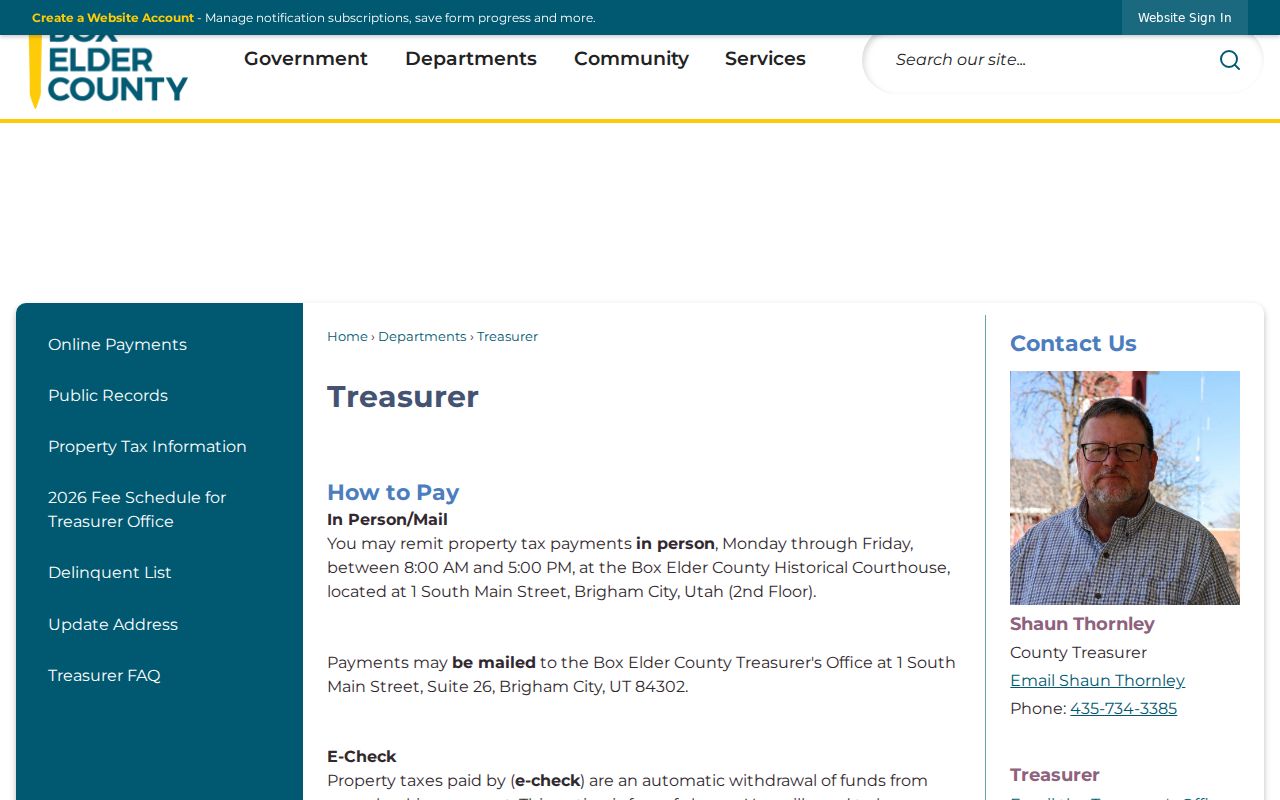
The Treasurer collects the tax and passes receipts along to taxing entities. Setting fair market value, fixing rates, and resolving value appeals are not its work. E-check payments are free. Card payments carry a convenience fee of at least $1.50 or 2.5 percent, whichever is greater, under the county payment information. Check the live payment screen before submitting, since processing terms may change. The county Treasurer page describes the account-number route and the payment options. Open the official Box Elder County Treasurer page before sending a payment.
Delinquent Tax Records in Box Elder County
The Treasurer publishes an annual delinquent-tax listing as part of its collection work. Utah tax guidance treats property taxes as delinquent after November 30. It also describes penalty rules that can affect later payment. A listing is a point-in-time notice. Confirm the current account status with the Treasurer before relying on a printed or downloaded list. A delinquent entry does not tell the whole story about a parcel's title or sale status. It is a tax collection signal. A recorded lien, a tax-sale process, or a later payment each needs its own source check. Use the Recorder and Treasurer systems for that. The amount owed belongs to the Treasurer. The value behind the bill belongs to the Assessor. When a property shows up on a list, match the account and parcel with care. Similar addresses, adjoining lots, and shifting parcel descriptions can create a mistaken association whenever the account number goes unchecked.
The Box Elder County Assessment Appeal Clock
Utah sends locally assessed property notices by July 22. An owner who disputes the value may appeal to the county Board of Equalization by September 15 or within 45 days after the notice is mailed, whichever date is later under the state process. The local appeal uses Form TC-194. Box Elder County's Board of Equalization can be reached at 435-734-3317 for process questions.
A local decision may be appealed to the Utah State Tax Commission within 30 days. Follow the notice and official appeal page for current instructions; deadlines are tied to the notice and should not be estimated from a portal's display date. A complaint that a tax rate is high is different from evidence that the property's market value is wrong.
Build the appeal record from comparable sales, physical condition, parcel characteristics, and relevant appraisal evidence. Keep the notice, supporting documents, and submission confirmation together.
Evidence for a Box Elder County Value Appeal
An appeal should speak to the property's value as of the valuation date. Identify the parcel clearly. Then explain why the county estimate does not match the market evidence. Comparable sales, an appraisal, photographs of condition, and clean measurements all strengthen a claim. A tax-rate gripe alone does not prove the Assessor's market value is off.
State materials point to TC-194 for the county appeal and TC-104E for some later routes. The Board of Equalization sits at 435-734-3317. Pull current forms and instructions from the Utah Tax Commission. The evidence and attachments a case needs will vary.
Keep the appeal aimed at the parcel's market value and condition. Retain proof of when you filed.
Relief programs use their own forms. Their deadlines differ too. Utah's property-tax publication sets September 1 for relief applications, so confirm current eligibility and the filing route with the program itself.
Keep Box Elder County Value Review Separate from Payment
Three offices play distinct roles. The Assessor values property, the Board of Equalization hears local valuation appeals, and the Treasurer collects the resulting tax bill. A payment question belongs with the Treasurer. A value disagreement belongs on the appeal calendar. Paying a bill never appeals an assessment, and an appeal never erases a balance that is otherwise due.
Appeal window. Use the date on the official notice: Utah's local appeal deadline is September 15 or 45 days after mailing, whichever is later. Contact the Box Elder County Board of Equalization at 435-734-3317 if the filing route is unclear.